

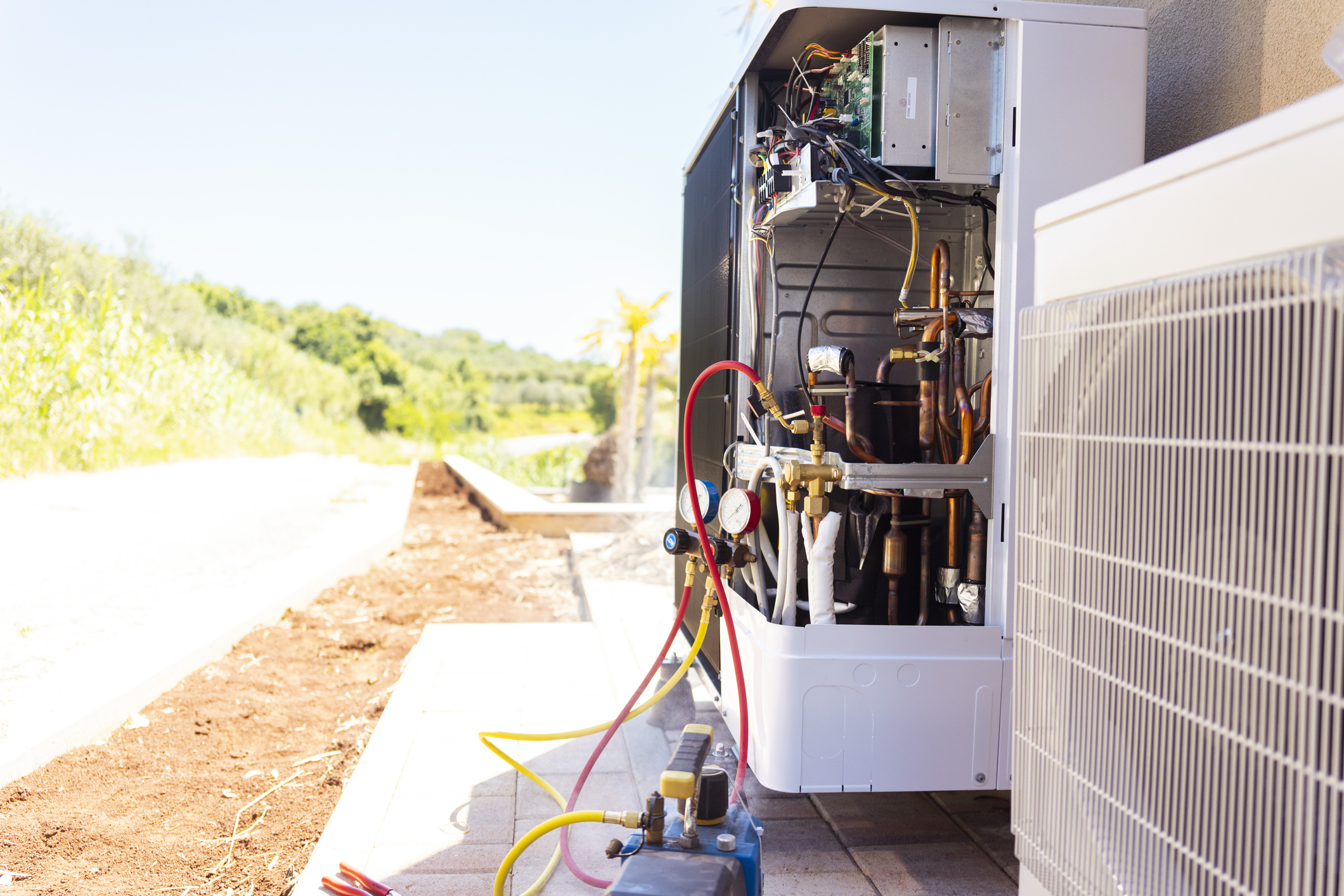
A heat pump can seem to do the opposite of what you need on a chilly morning. The outdoor fan stops, the air from the vents feels cooler for a few minutes, and a cloud of steam rises from the outdoor unit. That sequence isn’t a breakdown. It’s the system doing exactly what it’s designed to do.
At AAA Furnace & Air Conditioning, we’ve served Silicon Valley since 1957, and our technicians complete more than 40 hours of training each year. Understanding normal heat pump behavior makes it much easier to recognize when something actually needs attention.
What Defrost Mode Does to a Heat Pump
Defrost mode removes frost from the outdoor coil, the part of the system that pulls heat from outside air. While the heat pump is heating your home, that coil runs significantly colder than the surrounding air. Moisture condenses on its surface and freezes into a thin layer of frost. Left unchecked, that frost blocks airflow across the coil and reduces heat transfer, so the system clears it before it becomes a thicker layer of ice.
To melt the frost, the system uses a reversing valve to temporarily change the direction in which refrigerant flows. For a few minutes, the heat pump essentially runs in cooling mode, sending warmer refrigerant through the outdoor coil until the frost clears. Then it switches back to heating.
During a normal cycle, you may notice a few temporary changes:
- Cooler Supply Air: Air from indoor vents can feel less warm for a short period while the system defrosts.
- Outdoor Fan Changes: The outdoor fan may stop during the cycle, depending on the equipment design.
- Steam or Water: Steam can rise from the outdoor unit, and melting frost may drip onto the ground.
- Refrigerant Flow Sounds: A brief whooshing or shifting sound can occur as the reversing valve changes position.
Normal Behavior vs. Warning Signs Worth Calling About
A normal defrost cycle is brief, ends on its own, and is followed by a return to regular heating. The frost melts, the outdoor unit resumes its typical operation, and indoor comfort recovers within a few minutes. Many systems activate auxiliary heat during defrost to limit how much cool air reaches your vents while the cycle runs.
Watch for these warning signs:
- Persistent Ice: Heavy ice remains on the outdoor coil or surrounding components after the system has had time to complete a cycle.
- Repeated Defrosting: The unit switches into defrost mode frequently and still delivers inadequate heat indoors.
- Continuous Cool Air: Vents keep delivering cool air instead of returning to normal heating operation.
- Unusual Noises: Grinding, rattling, loud buzzing, or repeated clicking at the outdoor unit.
- Lost Heating Operation: The heat pump doesn’t resume heating after the frost appears to melt.
These symptoms can point to more than one issue. A technician may find an airflow restriction, a failed outdoor fan motor, blocked condensate drainage, or a temperature sensor that isn’t accurately reading coil conditions. Other possibilities include a malfunctioning defrost control board, a reversing valve problem, or an improper refrigerant charge (meaning the amount of refrigerant circulating through the system isn’t within the range the equipment requires).
Safe Checks to Make Before Calling for Repair
A few quick observations indoors and out can help you figure out whether to call right away or give the system more time. Start inside by confirming the thermostat is set to Heat and the fan is on Auto. Then check the air filter. A clogged filter limits airflow through the indoor portion of the system and can affect performance in ways that mimic other problems.
Outside, look around the unit without touching the coil, wiring, or refrigerant lines. Clear away loose leaves, branches, and anything stored near the unit so air can move freely. If you see ice, watch whether it clears during a defrost cycle rather than trying to remove it yourself.
Avoid these DIY fixes:
- Don’t Chip Ice: Tools can bend delicate coil fins, puncture refrigerant lines, or damage wiring.
- Don’t Pour Hot Water: Sudden temperature changes can damage components, and water can refreeze around the unit.
- Don’t Bypass Controls: Defrost controls and safety switches protect the equipment from damage.
- Don’t Handle Refrigerant: Refrigerant diagnosis and adjustment require trained service professionals and proper equipment.
When It’s Time to Schedule Heat Pump Repair
Call for repair when ice doesn’t clear after a cycle, defrost seems unusually frequent or prolonged, or the system can’t restore normal heat. A heat pump that runs but can’t maintain comfort wastes energy and puts added strain on its components. Small problems tend to grow when they’re left alone.
During heat pump repair in San Jose, our technicians can inspect the outdoor coil, airflow, fan operation, temperature sensor, defrost control board, condensate drainage, refrigerant levels, and reversing valve. Each of those components plays a role in whether the unit can detect frost, melt it effectively, and return to heating when the cycle ends.
If your heat pump isn’t behaving the way it should, we’re here to take a look and walk you through your options. Reach our team at (408) 521-1259.